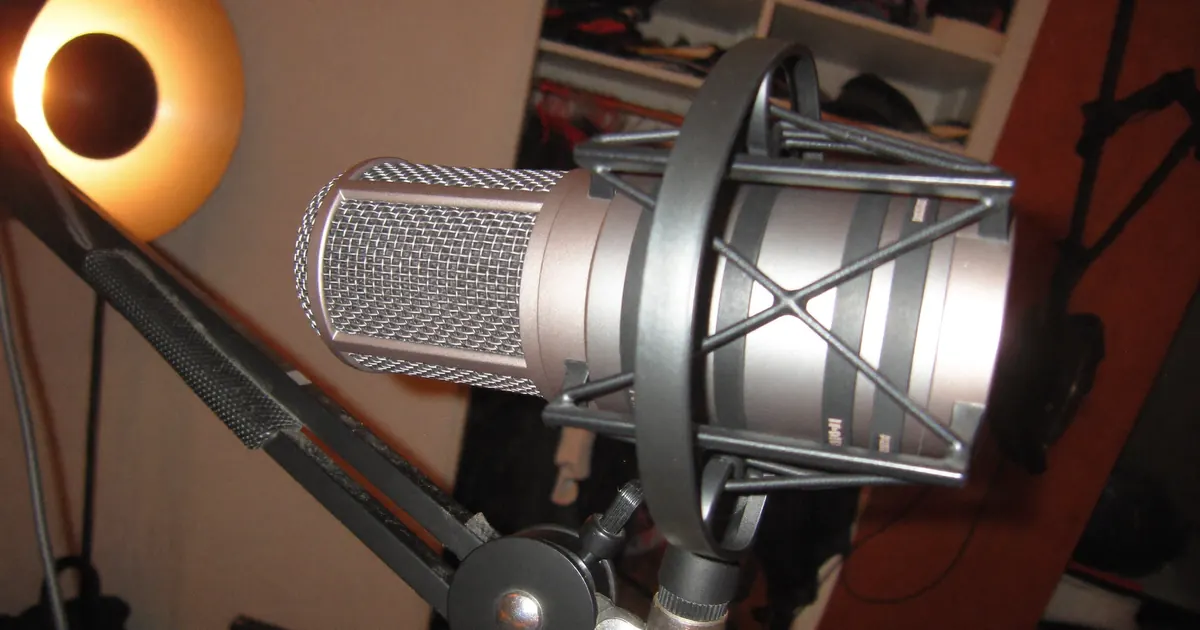
Best Mic for Recording Vocals at Home (2026)
VP
VocalPresets Team
7 min read
The best mic for recording vocals at home in 2026 is the one that matches your room and your input, not the one on a streamer's desk. If you are in a live bedroom, a forgiving dynamic will beat a bright condenser. If you have a closet and a clean interface, a cheap XLR condenser is enough to release. The capsule matters. The mix still matters more.
Best mic for recording vocals at home: pick the room first
A microphone is a speaker in reverse. It hears the walls.
Hard floors, bare drywall, a computer whirring two feet away — that is your record, no matter what the Amazon title says. A $400 broadcast mic in that room will sound like a $400 recording of your bedroom. A $100 dynamic pointed the right way in a closet full of clothes will sound closer to a song.
So the first question is not "SM7B or NT1." It is "how ugly is the room."
- Noisy apartment, untreated, people in the next room: dynamic. USB or XLR.
- Quiet closet, clothes, door shut: condenser is fine, even a budget one.
- Shared space and you record at midnight: dynamic, closer, more off-axis if S's pop.
The longer recording walkthrough covers placement, gain, and a closet booth. Use this post to choose the mic, then go record.
USB vs XLR in 2026
USB means the mic has a tiny interface inside. Plug into the laptop. Select it in FL Studio, Ableton Live, or Logic Pro. Fine for verse one of your career.
XLR means you need an audio interface. One clean preamp. Phantom power if the mic is a condenser. More headroom. Easier to upgrade later without buying a whole new voice.
Honest split:
- USB if you have zero other gear and you want to record tonight.
- XLR if you can spend $100-200 more on an interface, or you already own one.
A dual USB/XLR mic (Samson Q2U, some Shure MV7 units) is the least regretful first buy. Use USB now. Use XLR when you get an interface. You do not throw the mic away.
Do not buy a $60 no-name "studio condenser" with a cheap boom and a round LED halo as your plan. Those kits teach you that vocals are supposed to sound thin and fizzy. They are not.
Best budget picks (under $150)
Shure SM58. The live vocal workhorse. Forgiving. Hard to break. Not fancy on the top end. In a bad room it is one of the best cheap decisions you can make. You will need an interface and enough gain. It is not USB.
Samson Q2U. USB and XLR. Dynamic. Sounds like a budget broadcast mic, which is a compliment in a bedroom. Fine for rap, fine for sung demos. Upgrade path built in.
Audio-Technica AT2020 (XLR). The classic first condenser. Clearer and airier than the dynamics above. Only buy this if you can treat a closet or sit close and high-pass the rumble. Pair it with a real interface, not a mystery USB box.
Audio-Technica AT2020USB-X. Same idea if you are not ready for XLR. Convenient. A little more room noise than a dynamic. Use a closet.
Any of these can put a real record out. None of them will save a terrible take or a chain of random YouTube plugins.
Best mid-range ($150-$400)
Rode NT1 (current gen). Quiet. Smooth. A lot of independent artists' first "this sounds like a record" condenser. Still a condenser. Still hears the room. Worth it when the room is under control.
Shure MV7+. USB and XLR. Dynamic. Built for speech and music. Less "studio fairy dust" than an NT1, more control in a live room. Good if you rap and talk on the same desk.
Lewitt or AKG entry condensers in this range are fine if the reviews talk about noise floor and a real shock mount. Buy from a shop with returns. Bedroom acoustics vary. Your voice varies.
Skip the collector chase. You do not need a vintage tube mic. You need a consistent capsule, a pop filter, and a stand that does not boom when you tap the desk.
The SM7B question
The Shure SM7B is a great mic. It is also the most over-recommended mic for artists who do not have the rest of the path.
It needs gain. A lot of cheap interfaces do not have enough clean gain, so people buy a Cloudlifter or an interface with a stronger preamp. That is more money. In an untreated room, the SM7B is still a dynamic, which is good, but it is not magic. A 58 or an MV7 will get you 90% of the way for less.
Buy the SM7B when:
- You already have an interface with real gain
- You record a lot
- You like a darker, closer rap or spoken tone
- You are not buying it because a thumbnail told you to
Until then, spend the extra money on a closer, a stand, and a chain you will actually use.
Placement that beats the brand
Sit or stand so the mic is slightly below or at the corner of your mouth, not swallowed. A pop filter a few inches out. Four to eight inches from the capsule for most bedroom work. Closer if the room is ugly. Back off if you hear plosives or low-end boom.
Point the back of a cardioid mic at the noise — the window, the PC, the door. Cardioid rejects the rear. Use that.
Do not record at the end of a long reflective hallway "because it sounds big." It sounds like a hallway.
The full major-label-from-a-bedroom argument is not a mic argument. It is room, performance, then processing.
The mic is not the mix
This is the part that keeps you from buying three capsules in a year.
A clean AT2020 into a decent interface, tuned, EQed, compressed, and sitting in the beat will beat an SM7B into a messy chain every time. Listeners do not hear your shopping cart. They hear whether the vocal feels finished.
If you want the whole desk — mic, interface, headphones, chain — the setup post is the map.
Then put a chain on so you are not judging the mic through a raw, dry, scary file. Raw vocals in a bedroom always sound smaller than Spotify. That is normal.
A free starting chain exists so you can hear the mic in a real record, not in a vacuum.
Free
Big Drip

Vocal Labs
FreeLoad Big Drip. Record a verse. If the mic is the problem, you will hear noise, harsh top, or no body. If the mic is fine and the song still feels amateur, you needed the chain and a better take, not a new capsule.
Browse more finished chains when you know the lane you actually sing in. The mic stays. The preset changes with the song.
What I would buy with three budgets
$100, no interface: Q2U. Closet. Free chain. Release.
$250, no interface: MV7+ or AT2020USB-X. Closet. Same chain. Release.
$400, starting from zero: AT2020 or NT1, a simple two-input interface, headphones that do not leak, a stand. XLR forever. That bundle beats an SM7B and a laptop jack.
Headphones matter more than people admit. If you mix on loud, leaky cans, you will sing quieter and the mic will hear the beat. Closed backs while tracking.
FL Studio first, then Ableton Live, then Logic Pro — the DAW does not choose the mic. The room does.
A pop filter and a real stand are not extras. A mic sitting on a stack of books will pick up every tap. A $15 filter will save more records than a second capsule. Treat those as part of the mic, not as later.
FAQ
What is the best mic for recording vocals at home if I rap?
A dynamic in a live room: SM58, Q2U, MV7, or SM7B if you already have gain. Close, cardioid, back of the mic to the noise. Then a chain that punches without washing you out. A bright condenser is optional, not required.
Do I need a condenser to sound professional?
No. Plenty of records you like were sung on dynamics. Condensers give more air and more room. Professional is a clean take plus a finished chain. The capsule is one piece.
Is USB good enough to put a song on Spotify?
Yes, if the take is good and the mix is finished. USB is a convenience tax, not a quality death sentence. Move to XLR when you want cleaner preamps and a mic you can keep for a decade.
Should I upgrade my mic or my plugins first?
If the recording is noisy, distorted, or buried in room, fix the room and the mic path. If the recording is clean and still sounds like a demo, you need a chain, not a new capsule. Load a preset and record before you open another store tab.
Pick the mic that fits the room. Put it on a stand. Load a chain. Record the verse tonight — the best mic for recording vocals at home is the one that is already plugged in.