How to Mix Background Vocals and Ad-Libs
VP
VocalPresets Team
7 min read
How to mix background vocals is a placement job: they should support the lead, not compete with it. Pan them off-center, duck them under the story, and give them the delay throws and extra space the lead cannot afford. If you can understand every background word as clearly as the hook, they are too loud, too dry, or too centered.
Ad-libs follow the same rules with more attitude. A "yeah" that slaps on the right, a filtered echo after the punchline - that is the record. A second lead hiding in the left speaker is not.
Backgrounds Are Not Small Leads
Treat them like a different instrument.
The lead gets the body, the center, and the short space. Background vocals get less chest, more sides, more wet. Harmonies from
are one kind of background. Call-and-response, stacked "oh"s, and trap ad-libs are another. Doubles are a third - they thicken the same lyric.
If you copy the lead chain onto the backgrounds at the same level, you did not mix backgrounds. You cloned the hook.
Three Moves: Pan, Duck, Throw
You can ignore half the plugins on the internet if you get these three right.
Pan
Put backgrounds away from the middle.
- Pair of stacked "oh"s: 40-70 left and right
- Single ad-lib: hard left or hard right, then answer it on the other side later
- Whispered pad: wide, even disappearing in mono
- Sung harmony you need to hear: closer to center than a throwaway ad-lib, still not at 0
Do not pan the lead to "make room." Move the backgrounds. The story stays in the middle so the 808 and the vocal share a spine.
If the beat already owns a side (a stereo synth stab, a hi-hat pattern), park the ad-lib on the other side. Backgrounds should fill holes.
Duck
Ducking means the background gets out of the way when the lead is talking.
The simple version: pull the background fader down until you only notice it between lead phrases or on the ends of words. The engineering version: sidechain a compressor on the background bus from the lead, so each lead word pushes the stack down a dB or two.
You do not need a fancy sidechain to start. Volume automation is enough. Draw the ad-lib up after the punchline. Draw the harmony down when the lead and the harmony share the same syllable at the same pitch.
If a background line is musically important for one bar, let it speak for that bar. Then put it back in its place.
Delay throws
A throw is a louder echo on one word, not a delay on the entire track.
Set a quarter or dotted-eighth delay on a send. Filter it so the repeats are thinner and darker than the lead. Automate the send up on the last word of a line, or on an ad-lib. Automate it back down.
This is how trap vocals feel expensive without drowning the verse in hall. The lead stays dry. The room answers.
Reverb can live on the same background bus. Longer and darker than the lead. If the throw and the hall are both bright, the 808s get fizzy and the ad-lib turns into a spray.
Trap Ad-Libs vs R&B Stacks
Same three moves. Different taste.
Trap and drill: dry lead, loud toys
The lead stays in your face. Ad-libs are short, panned, sometimes pitched, sometimes shouted. They should feel like the room reacting, not like a choir.
- Less reverb on the lead, more filtered delay on the ad-libs
- Harder pans
- Faster, tighter backgrounds - cut the tails so they do not smear the next bar
- Optional pitch drop or telephone EQ on one ad-lib, not on all of them

Wasted

Vocal Labs
$14.99Wasted is the melodic-trap version: heavy tune, aggressive space, Atlanta-leaning. Put the lead through it with restraint. Put the ad-libs through a wetter send of the same world so the "yeah"s feel like the record, not like a second mixtape.
Drill
Vocal Labs
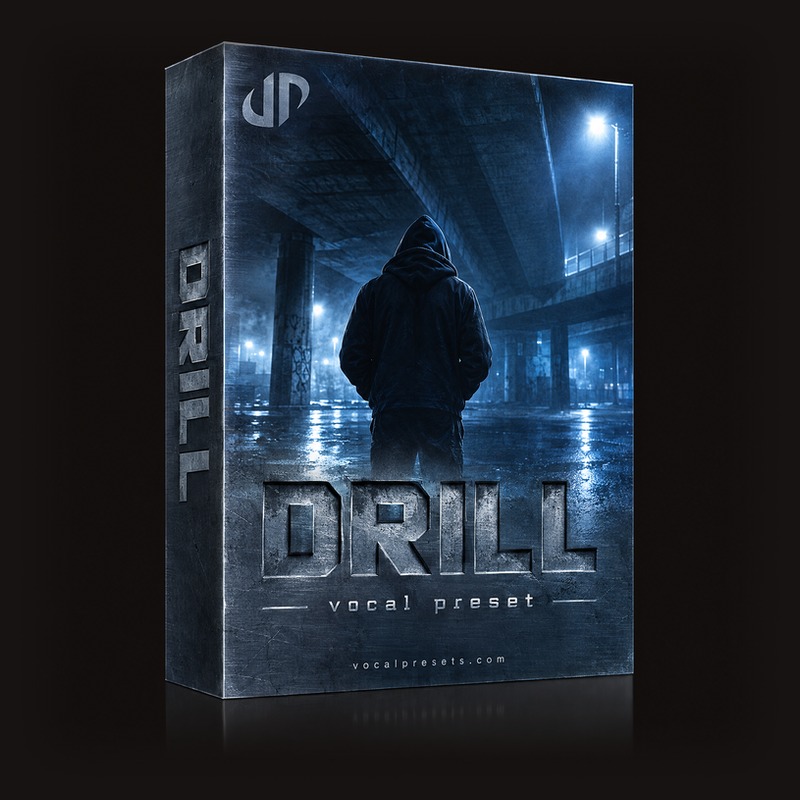
$14.99Drill is the dry, aggressive version - Pop Smoke / Central Cee energy, heavier compression, cleaner EQ. Backgrounds here should be punchy and short. If you wash a drill ad-lib in a long hall, you lose the grit the chain is built for. Keep the throws, lose the cathedral.
For more of that lane, use
.
R&B: stacks that bloom, ad-libs that glow
R&B backgrounds are often sung. They can be louder than trap ad-libs and still be "background" if they are wider and brighter than the lead.
- Softer pans on the main harmony, wider pans on the air
- Longer, darker hall on the stack bus
- Fewer joke ad-libs, more held vowels
- Duck under the lead vowel, not under every consonant

Stargaze
Vocal Labs
$14.99Stargaze is the dark, smashed, atmospheric cousin - Travis / Don Toliver space, not a bright pop stack. Use it when the backgrounds should feel like smoke around a moody lead. If you need sparkle instead of smoke, keep Stargaze off the high harmonies and give those a brighter send.
How to Mix Background Vocals on One Bus
Do not mix twelve ad-libs as twelve full chains.
- Lead on its own chain. Finished first.
- All backgrounds and ad-libs to one bus (or two: "Stack" and "Ad-libs").
- On the bus: extra high-pass, extra de-ess, one compressor to glue the group, one reverb send, one delay send.
- Pan on the individual tracks. Duck and throws on the bus or with automation.
In FL Studio, that is a mixer track with the lead routed to the beat, and another track that all the backgrounds output to. Ableton Live is a group. Logic Pro is a summing stack. Same idea.
When the bus is too loud, you pull one fader. When the S's on the stacks get ugly, you de-ess one place. That is how to mix background vocals without living in the mixer until sunrise.
EQ and Compression on Backgrounds
High-pass more than the lead. Backgrounds do not need the chest. They need to stay out of the 808 and the lead's body.
Cut a little more low mid. Add air if they should sparkle. If they should sit behind, do not add air - add distance with reverb.
Compress backgrounds a bit more than the lead. You want them stable. A wild ad-lib that jumps 6 dB will steal the verse. A smashed whisper is fine. A smashed lead is not.
Tune backgrounds in the same key. A hard-tuned ad-lib under a loose lead can work as an effect. A hard-tuned harmony under a loose sung lead usually sounds like a mistake. Pick one world.
Automation That Sounds Like a Record
Ride the background bus down in the verse. Up in the hook. Mute whole stacks in the breakdown.
Throw the delay on the last word before a drop. Pan an ad-lib the opposite way the second time it appears so the second hook feels wider without new tracks.
If an ad-lib hits the same syllable as a lead word, nudge it later or duck it. Two identical words at the same time in different pitches is how lyrics get mushy.
Print a pass, walk away, come back. Backgrounds always feel too quiet the night you mix them and too loud the next morning. Trust the morning.
What Not to Do
Do not solo backgrounds to make them sound like a hit. They will. Then they will ruin the song.
Do not put every ad-lib dead center "for punch." That punch belongs to the lead.
Do not use the same long hall on lead and backgrounds at the same send level. Distance is the point.
Do not leave the talkback, the laugh, and the failed take in the playlist. Edit. Backgrounds should be decisions.
Do not chase a YouTube "32-track vocal session" on a bedroom song. Four good ad-libs beat sixteen leftover clips.
FAQ
How loud should background vocals be?
Low enough that the lead is still the thing you can write down. A useful test: if you mute the backgrounds and the song barely changes, they were supporting. If the song collapses, either they were doing the lead's job or the lead is unfinished. Start too quiet. Sneak up.
Should ad-libs have Auto-Tune?
If the lead is tuned as an effect, the ad-libs usually should be too, in the same key. If the lead is almost natural, a slammed ad-lib can sound like a different artist walked in. Match the world. Then you can slam one throw as a joke.
Why do my background vocals disappear in the car?
They were too wide, too thin, or both. Cars and phones collapse stereo. Keep a little body on the harmony you care about, and keep the lead strong enough to carry mono. Throws can vanish. The hook cannot.
Can I mix backgrounds with the same preset as the lead?
Yes - on a bus, with more high-pass, more send, and less level. Wasted or Drill on a trap lead with a wetter ad-lib bus still sounds like one record. Loading a second, brighter lead preset on every ad-lib at full volume does not. Same family. Different place in the room.
Pan the ad-libs, duck them under the lead, and put the delay on the last word. Load Wasted or Drill, record the "yeah" on a new track, and stop when the hook feels bigger - not busier.