
How to EQ Vocals So They Don't Sound Amateur
VP
VocalPresets Team
6 min read
How to EQ vocals is cuts first, then a little presence — so the words sit in the beat instead of sitting on top of it like a demo. You are not painting a textbook curve. You are removing the closet, the cardboard, and the harsh S, then lifting the part of your voice that already reads on a phone speaker.
If the vocal still feels separate from the instrumental after EQ, the rest of the mix is the next problem:
If you are in FL and you need the whole insert path, not just EQ:
How to EQ vocals against the beat
Solo is how you find a nasty buzz. The beat is how you decide if a cut was smart.
Put the instrumental up. Loop a line that should be obvious. Touch one band. If the vocal gets easier to understand without getting thinner or harsher, keep it. If it just gets louder in a shiny way, you probably boosted instead of cleaned.
Bedroom mics pick up rumble, a boxy room, and sharp consonants. Those three problems are most of "this sounds amateur." Fix those before you add air.
Cut first: mud, nasal, harsh S
Mud (low rumble and low-mid wool)
High-pass until the air conditioner and the desk thump leave. For a lot of rappers that is 80–120 Hz. If you have a deep voice and the high-pass makes you sound like a phone call, you went too far. Bring it down until the chest comes back.
Mud also lives around 200–400 Hz when the room is small and the mic is close to a wall. A wide, gentle cut there can pull the wool off the words. Narrow surgical notches are for a whistle, not for "it feels thick."
If the 808 and the vocal are both occupying the same low-mid space, the vocal loses. Cut the vocal's useless low, do not try to make the 808 polite with vocal EQ alone.
Nasal (the honk)
Nasal is often 800 Hz to 1.5 kHz, sometimes a little higher. It sounds like the vocal is coming through your nose or a hallway.
Sweep a medium-Q cut until the honk drops. Stop when the voice loses its character. A 1–3 dB cut is common. A 10 dB crater is how you get a hollow YouTube vocal.
Not every voice is nasal. If you do not hear a honk on the beat, skip this band. Empty cuts stack into a thin record.
Harsh S (the cheap-mic sting)
Harsh S and T sounds live around 5–8 kHz, sometimes higher. They make a take sound cheap even when the performance is good.
Do not boost "air" first and then wonder why headphones hurt. Cut the sting, or de-ess, then decide if you still want sparkle.
A narrow dip on the worst spot works. A de-esser is cleaner if you have one. If the whole vocal goes lispy, you overshot. The goal is a consonant that is clear, not a whistle.
Then presence — a little
Presence is 2–4 kHz. This is where lyrics become understandable on a laptop speaker.
After the cuts, add 1–3 dB if the vocal still hides under hats. If the vocal already pokes and the beat feels small, you do not need this boost. You need the beat a little quieter or the vocal fader, not more 3 kHz.
Air above 10 kHz is optional shine. Bright pop and some R&B like it. Dark rap often does not. If your mic is already brittle, skip the air band. "Amateur" is frequently too much top, not too little.
How this changes by song
Warm R&B. Fewer presence boosts. Keep body. Darker space after EQ. A chain that already thinks this way:
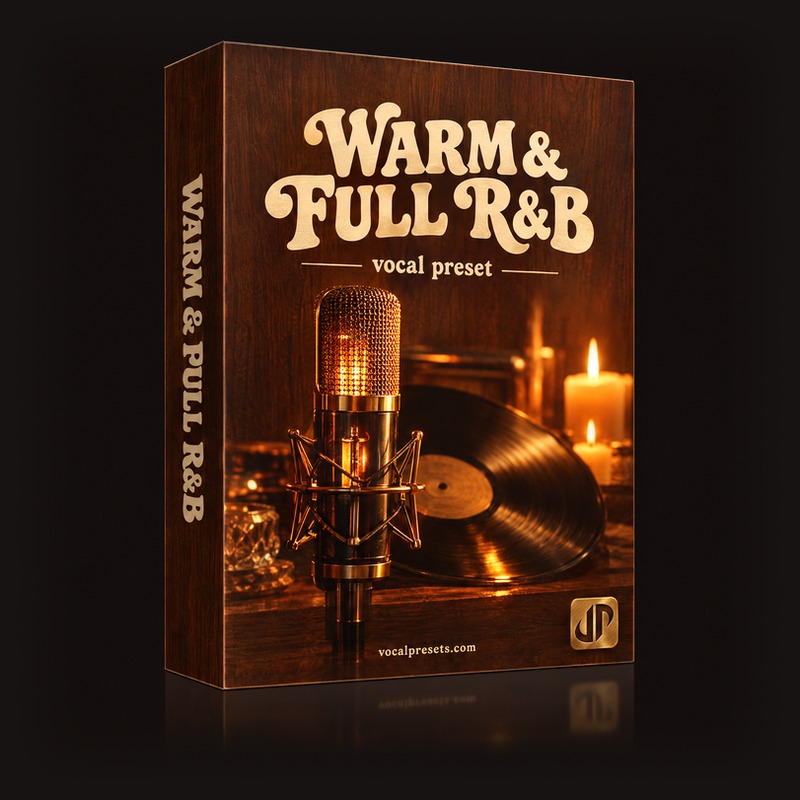
Warm & Full R&B

Vocal Labs
$14.99Warm & Full R&B is the low-end warmth and late-night control lane. EQ in that direction: less sting, more chest, no radio smile if the song is intimate.
Modern, loud, streaming-bright. Tighter low-mid, more read in the presence band, careful air. Not a harsh smile.
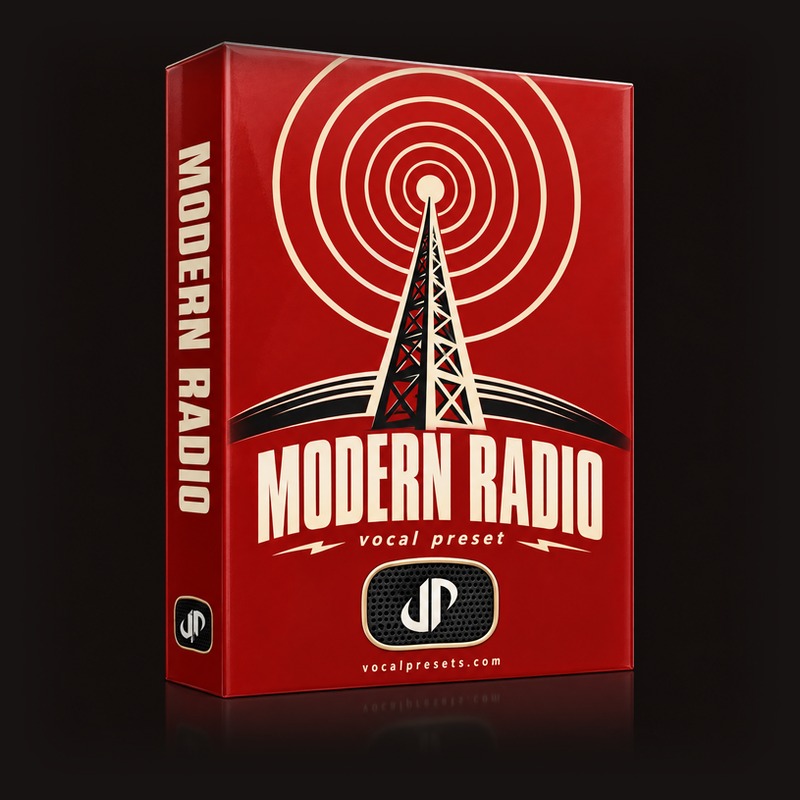
Modern Radio
Vocal Labs
$14.99Modern Radio is the loud, even, streaming-ready finish. If your raw vocal is dull on a bright beat, this is the EQ attitude — still your voice.
Dark rap. High-pass the junk, keep the weight, do not add air for sport.
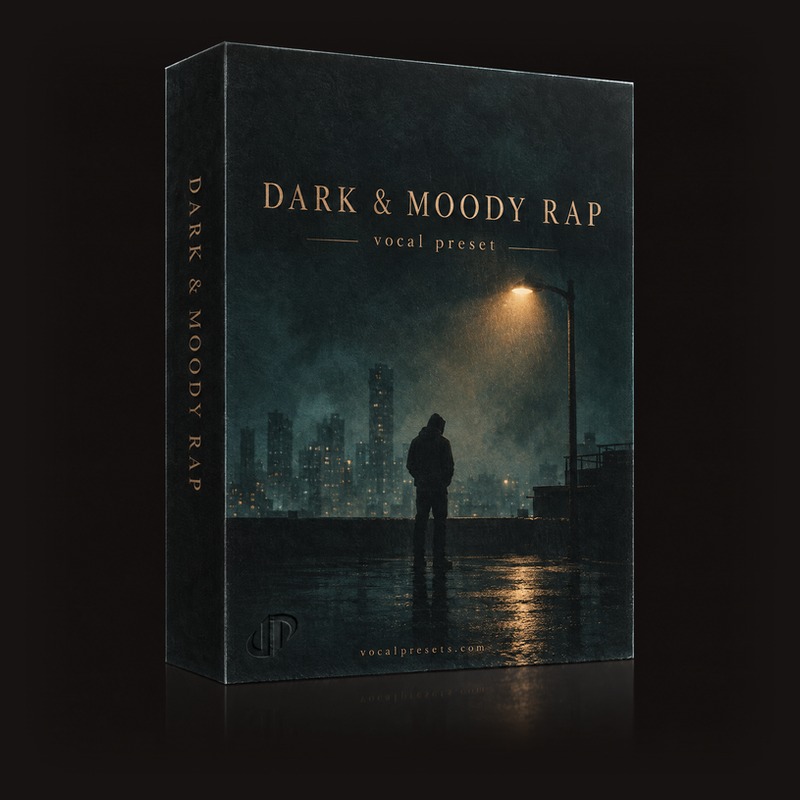
Dark & Moody Rap
Vocal Labs
$14.99Dark & Moody Rap leans into low end and atmosphere. If you EQ that vocal like a pop singer, you will strip the thing the song wants.
EQ is in a chain, not alone. Order matters:
A 10-minute EQ pass that does not spiral
- High-pass until rumble leaves.
- Loop the verse on the beat.
- If it is woolly, wide cut 200–400 Hz a little.
- If it honks, cut the nasal band a little.
- If S sounds hurt, dip or de-ess 5–8 kHz.
- If words still vanish, small presence lift.
- Stop. Print. Record the next song.
If you are still sweeping after twenty minutes, you are mixing boredom. Bypass the EQ. If the take is the problem, no curve will save it.
What not to copy from charts
Those rainbow "vocals live at 1 kHz" posters are averages. Your mouth is not an average. Your closet is not a studio.
Do not boost every band a little "to be safe." That is makeup gain with extra steps. Cuts that remove a problem will do more than a smile EQ that makes the amateur brighter.
Do not EQ only in solo, then wonder why it dies in the mix. Do not EQ the vocal to fix a beat that is 6 dB too loud. Faders first, then bands.
Do not stack three EQs that all high-pass. One high-pass. One or two musical moves. Move on.
Common amateur EQ moves
Air first. The mic was already sharp. Now it is a hat.
A huge 3 kHz boost to "cut through." It cuts through like a smoke alarm. Try a cut on the competing instrument or a smaller presence lift.
No high-pass. The 808 and the vocal become mud. Listeners call it "bedroom."
EQ after a huge reverb on the same insert. You start shaping the room, not the voice. Tune and EQ the dry lead. Space on a send.
Copying another artist's curve. You do not have their mic, their room, or their voice. Use a preset as a starting tone, then listen.
Check the EQ on a phone
How to EQ vocals is not finished in studio headphones. Bounce a 30-second loop and play it on the speaker you actually use — phone, car, cheap earbuds.
If the vocal vanishes on the phone, you probably scooped too much body or you never added presence. If the phone hurts, you boosted the sting. Fix that band. Do not add a fourth EQ.
Headphones lie toward pretty. Phones lie toward midrange. The record has to survive both. That is why cuts first matters. A smile EQ that sounds expensive in headphones often sounds amateur on a speaker in a car.
Listen at a normal volume. Loud solos hide bad cuts.
High-pass vs a low shelf
A high-pass removes everything below the point. A low shelf turns the bottom down but leaves a little. Use a high-pass for rumble and AC. Use a shelf if the voice is a bit heavy but you still want chest.
If you high-pass at 200 Hz on a deep rap vocal, you will call it thin and blame the compressor. That was the EQ.
If you never high-pass at all, the 808 and the verse become one woolly sound. Listeners will not say "missing HPF." They will say it sounds like a bedroom.
FAQ
What frequency should I cut on vocals?
Start with rumble below ~100 Hz, wool around 200–400 Hz if it is there, nasal around 1 kHz if it honks, and harsh S around 5–8 kHz. Skip any band you cannot hear as a problem on the beat.
Should I EQ before or after compression?
Either can work. A common bedroom path is tuner, a cleanup EQ, compressor, then a small polish EQ. If you only have one EQ, put it after the tuner and before or after the compressor — just stay consistent.
Why does my vocal sound thin after EQ?
You high-passed too high or you scooped the body. Undo the last cut. Thin is not the same as clean.
Can a preset EQ for me?
Yes. A vocal preset is a whole chain, including EQ. Load one that matches the song, then change one or two bands for your voice. That is faster than building a curve from a chart.
Load a chain and record
Cut the closet. Leave the voice. Then stop sweeping.
Warm & Full R&B
Vocal Labs
$14.99Load the chain, hit record, and drop the song.