Best Drill Vocal Presets in 2026

Drill is one of the most sonically specific genres out there. The beat is dark, aggressive, and minimal. Your vocal has to match that energy -- but it also has to sit inside those sliding 808s and rolling hi-hats in a very specific way.
If you're recording drill in your bedroom and playing it back doesn't quite hit the way the records on your playlist do, the processing is the difference. Here's how to close that gap with the right drill vocal presets.
The Drill Vocal Sound You're Going For
UK Drill and NY Drill have slightly different vibes, but the core of how the vocal should sound overlaps:
Dry and direct. Drill vocals are not swimming in reverb like trap vocal presets. Your voice should be right in the listener's face. A tiny bit of room keeps it from sounding completely dead, but that's it. Drill is confrontational -- the processing should match. If you can clearly hear the reverb tail, you've got too much.
Hard compression. Drill vocals need to cut through dark, heavy beats. Your voice has to stay present at all times, no matter how loud the 808 is. A ratio of 6:1 to 8:1 with a fast attack (5-10ms) locks your vocal in place. You want 6-10 dB of gain reduction -- more aggressive than most genres. The vocal should feel dense and upfront, like it's right in your face.
Dark EQ. Unlike pop or R&B where brightness is the goal, drill vocals have a darker tone. A gentle cut above 10kHz avoids harshness. Emphasis in the midrange presence range (1-3kHz) makes your voice cut through the beat without sounding bright or pretty. A small boost around 800Hz adds weight to your delivery. High-pass at 100-120Hz to leave room for the 808s.
Grit and saturation. Drill vocals often have a subtle edge -- not heavy distortion, just enough to match the dark energy of the beat. It gives your voice aggression and weight that a clean recording alone doesn't have. In FL Studio, try Fruity Soft Clipper with minimal drive. In Logic Pro, the Overdrive plugin or Phat FX can add this edge. Free option: the Saturation Knob by Softube works across every DAW.
Dry lead, washed ad-libs. A signature drill technique: keep your main vocal almost completely dry but add bigger reverb on your ad-libs and background vocals. The contrast creates dimension without washing out your lead. Run your ad-libs through a separate bus with a dark plate reverb at 1.5-2 second decay. Pan them slightly wide (30-40% left and right).
Best Drill Vocal Presets in 2026
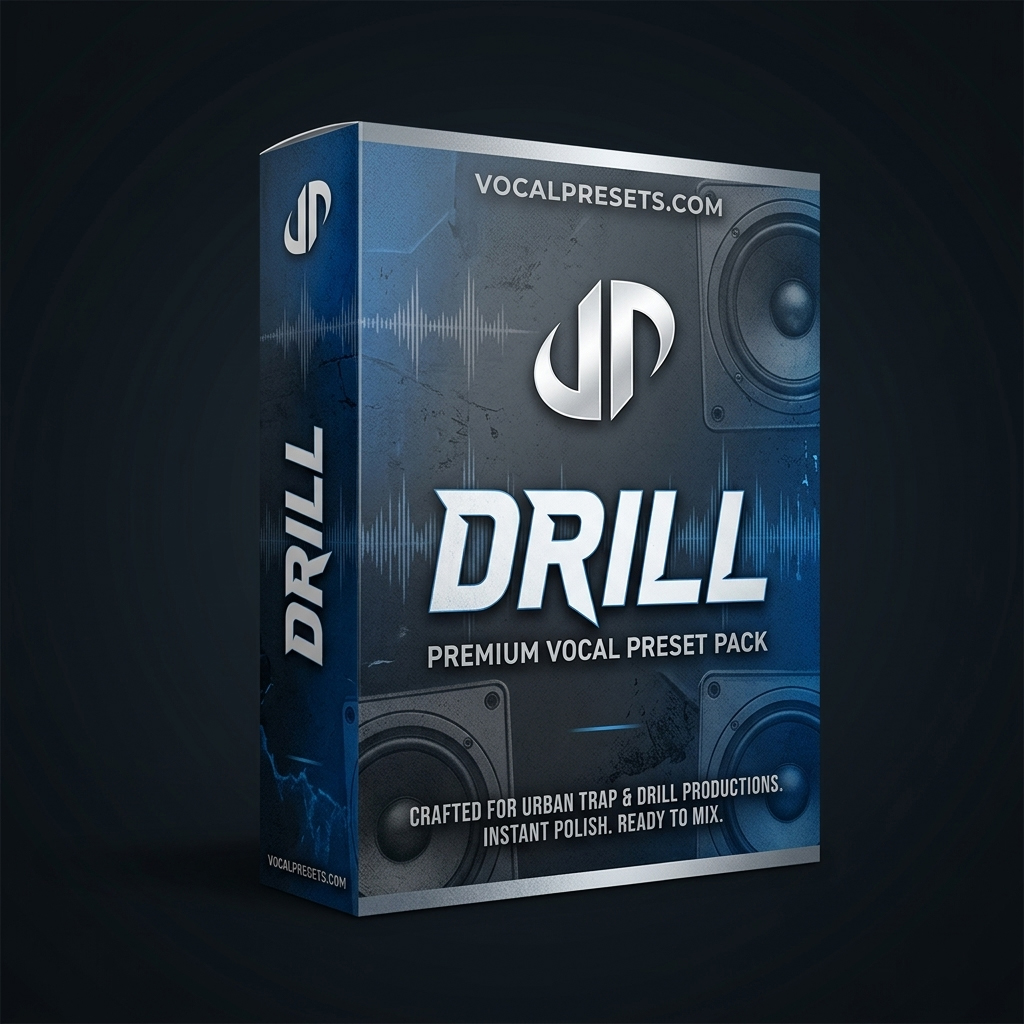
Drill

Vocal Labs
$8.99Drill is the one. Built specifically for this genre. Dark compression, the right EQ curve, and the grit that drill vocals need to sit properly in a hard beat. Load it, record, and your voice sounds like it belongs on the track. Compatible with all major DAWs -- FL Studio, Logic Pro, Ableton Live, and Pro Tools.
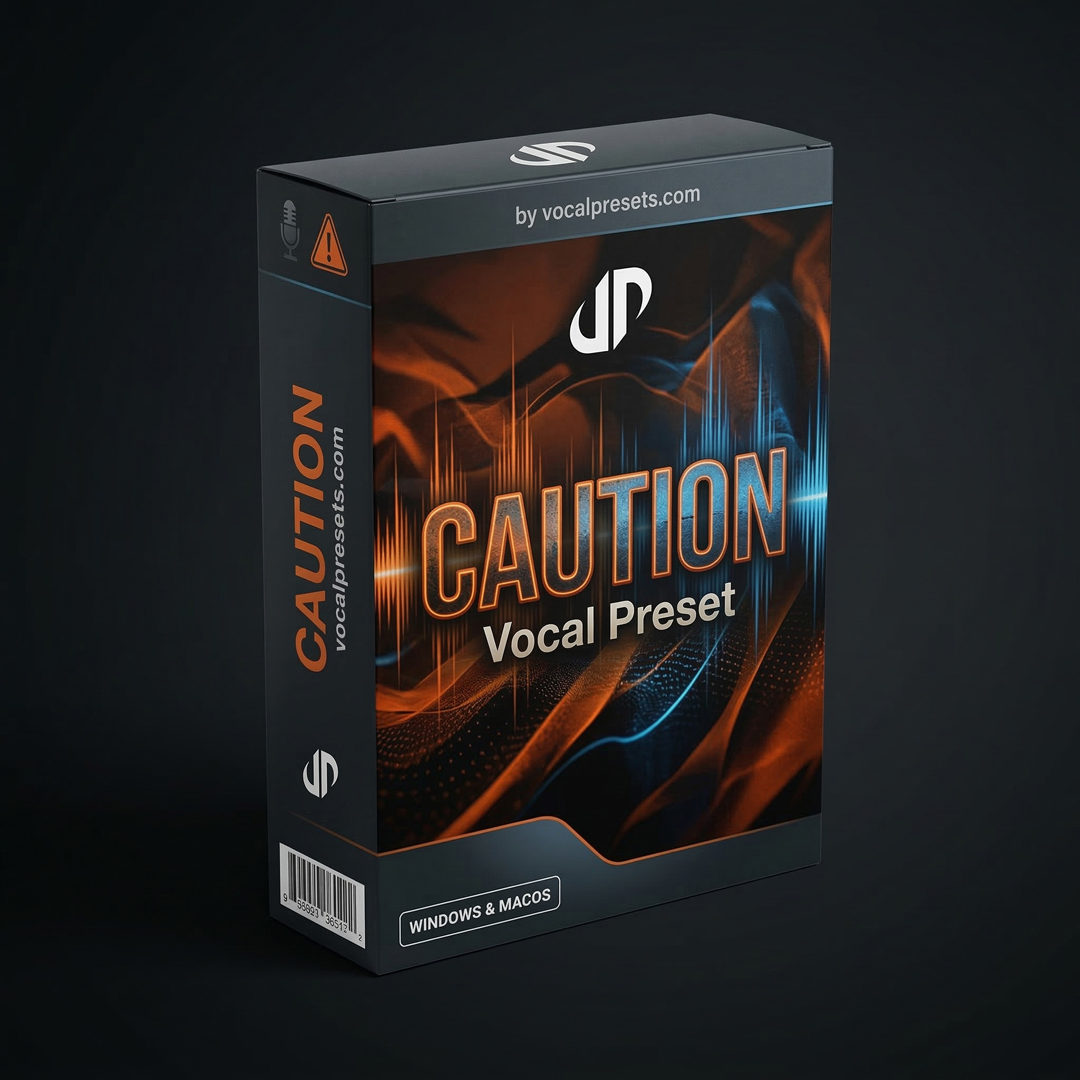
Caution
Vocal Labs
$7.99Caution works well for drill too -- especially UK Drill where the delivery is more understated and less melodic. Dark, aggressive, and built for heavy beats. The compression is slightly less aggressive than the Drill preset, which some artists prefer for flows that rely more on rhythm than energy.
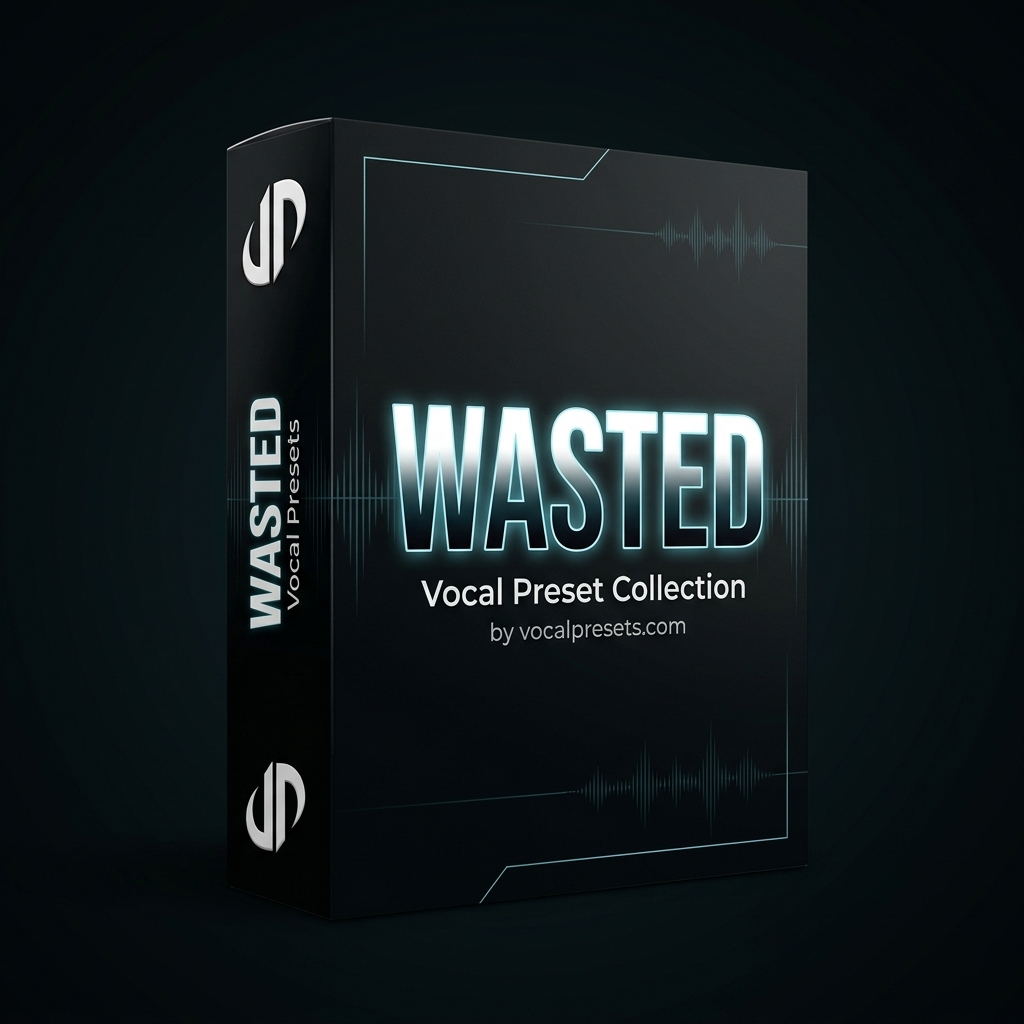
Wasted
Vocal Labs
$8.49Wasted adds a lo-fi, distorted edge that fits the rawer side of drill. If your style is more underground and unpolished on purpose, this preset matches that energy. The saturation stage is pushed harder here, which works for artists who want that gritty, almost garage-like vocal character.
Punchy
Vocal Labs
$7.91Punchy is the move when your delivery is high-energy and aggressive -- fast bars, hard consonants. It keeps your voice cutting through without compromising the darkness of the track. The transient-heavy compression design means every consonant hits hard, which is exactly what aggressive drill flows need.
Browse more drill and hip-hop presets:
The Drill Vocal Chain -- What's Actually in It
Understanding what's inside a drill vocal preset helps you tweak it for your specific voice. Here's the standard drill vocal chain:
- High-pass filter at 100-120Hz -- clears everything below where your voice lives so the 808 has room
- Noise gate -- kills background noise between bars. Threshold just above your room noise floor. Fast release so it doesn't cut off word tails.
- Heavy compressor -- 6:1 to 8:1 ratio, fast attack (5-10ms), medium release (50-100ms). You want 6-10 dB of gain reduction.
- Saturation -- light to medium drive. Just enough to add edge without obvious distortion.
- Subtractive EQ -- cut 4-6kHz slightly to reduce harshness, cut above 10kHz to darken the vocal
- Additive EQ -- boost 1-3kHz for presence, optional boost at 800Hz for weight
- De-esser -- targeting 5-7kHz. Drill vocals are already dark, so the de-esser can be lighter than other genres.
- Reverb on send -- very short decay (0.5-0.8 seconds), low wet mix. Just enough to avoid a completely dead sound.
NY Drill vs UK Drill: What's Different in the Vocal Chain
UK Drill tends toward monotone delivery, darker vocal presence, and almost zero reverb. Your voice should feel like it's right in the listener's ear -- dry, clear, and close. The EQ curve is darker overall, with more low-mid emphasis. UK Drill vocals also tend to use less compression than NY Drill because the delivery is already more dynamically consistent.
NY Drill inherits more from New York hip-hop tradition -- more animated delivery, slightly warmer tone, more room for expression in how your voice moves. The compression can be slightly more aggressive to handle the wider dynamic range, and a touch more high-end presence is acceptable.
For UK Drill: load your preset and pull the reverb back even further than the default. The drier the better. Consider adding a subtle stereo widener to your ad-libs only -- this creates contrast with the bone-dry lead.
For NY Drill: use the preset as-is, and consider adding a touch more compression after the chain for extra glue on your voice. A parallel compression setup (blend compressed and uncompressed signals) can add density without killing the energy of your delivery.
DAW-Specific Setup for Drill Vocals
FL Studio is the most popular DAW for drill production. Route your vocal to a mixer insert, build your chain in the effect slots. Fruity Parametric EQ 2 handles the EQ work. Fruity Limiter in compressor mode works for the heavy compression. For more detail, check out our FL Studio vocal presets guide.
Logic Pro users should reach for the Vintage VCA compressor -- its fast, aggressive character fits drill perfectly. The Channel EQ handles both the high-pass and tone shaping. See our Logic Pro vocal presets page.
Ableton Live users can build the chain in an Audio Effect Rack for easy recall. Ableton's stock Compressor in "Peak" mode with the feedback circuit off gives you the fast, aggressive response drill needs. More at Ableton Live vocal presets.
Recording Drill Vocals in Your Bedroom
Experiment without a pop filter. Some drill artists record without one to preserve the raw, explosive quality of their plosive consonants. If your delivery is naturally aggressive, try it and see if it fits your style. If you get too many plosives, move the mic slightly off-axis instead of adding the pop filter back.
Kill the room sound. Drill is unforgiving with room tone. If you can hear your bedroom in the recording -- the echo, the reflections -- it'll be obvious in the final song. Hang blankets behind you, use a reflection filter, record in a closet if you have to. Because drill vocals are so dry in the mix, any room sound in the raw recording has nowhere to hide.
Full takes over punch-ins. Unlike pop where you comp line by line, drill often sounds better when the performance is raw and uninterrupted. Record full takes and pick the one with the best energy. The imperfections often add character that makes it feel real. If you do punch in, make sure the energy level matches -- a mismatch between punched lines is more obvious in drill than almost any other genre.
Ad-libs are half the song. In drill, ad-libs carry a huge amount of the energy. After your main vocal is locked in, do a full separate take of just ad-libs. These are what give your drill songs texture and movement. Process them on a separate bus with more reverb and saturation than your lead for contrast.
Get your gain staging right. Record with your peaks hitting around -12 to -6 dBFS. Drill vocal chains use heavy compression, and if your input signal is too hot, the compressor will crush everything into an unlistenable mess. Too quiet, and you won't get the density the genre requires.
Budget Gear That Works for Drill
You don't need an expensive setup. Here's what actually matters:
- Microphone: Audio-Technica AT2020 ($100) or even the Fifine K669 ($30). Drill vocals don't need the silky top-end of a Neumann -- a darker, more midrange-focused mic actually helps.
- Interface: Focusrite Scarlett Solo ($120) handles everything you need. Clean preamps, low latency.
- Acoustic treatment: Blankets, pillows, closet recording. Spend $0 and get 80% of the way to a treated room.
- Plugins: Stock DAW plugins plus free vocal presets get you started without spending anything.
The Bottom Line
Drill is about conviction. Your voice, your words, your energy -- delivered with the processing that makes it hit through speakers. Start with the Drill preset, adjust the compression to your voice, and keep the reverb minimal. That's the sound.
Your bedroom is your studio. These vocal presets make sure it doesn't sound like one.
Frequently Asked Questions
What's the best DAW for making drill music?
FL Studio is the most popular choice in the drill community, followed by Logic Pro. Both handle drill vocal processing well. The DAW matters less than your vocal chain and your performance -- the best drill vocal presets work across all major DAWs.
Do I need Auto-Tune for drill vocals?
Not usually. Drill is primarily a rap genre, and most drill vocals use minimal or no pitch correction. If you're doing melodic drill (more common in UK Drill), subtle pitch correction with a retune speed of 20-40ms can help without making it obvious. Hard Auto-Tune effects are more of a trap thing than a drill thing.
How do I make my drill vocals sound less amateur?
Three things make the biggest difference: a clean recording (no room echo), proper gain staging (peaks at -12 to -6 dBFS), and heavy compression. Most bedroom drill vocals sound amateur because they're not compressed hard enough, so they disappear behind the beat. Load a dedicated drill vocal preset and your voice will sit where it needs to.
Should I mix my own drill vocals or send them to an engineer?
Start with a vocal preset to get 80% of the way there. If you're releasing singles on DistroKid and building your catalog, presets are fast and cost-effective. Once you're getting real traction -- thousands of streams, playlist placements -- investing in a mix engineer for your bigger releases makes sense. Until then, a good preset and a clean recording will compete.
Related reads: Best Trap Vocal Presets 2026 | Future-Style Trap Vocals | Best Free Vocal Presets
Ready to lock in your sound? Browse vocal presets built for artists recording at home. Start with the free vocal presets if you want to test the waters first.